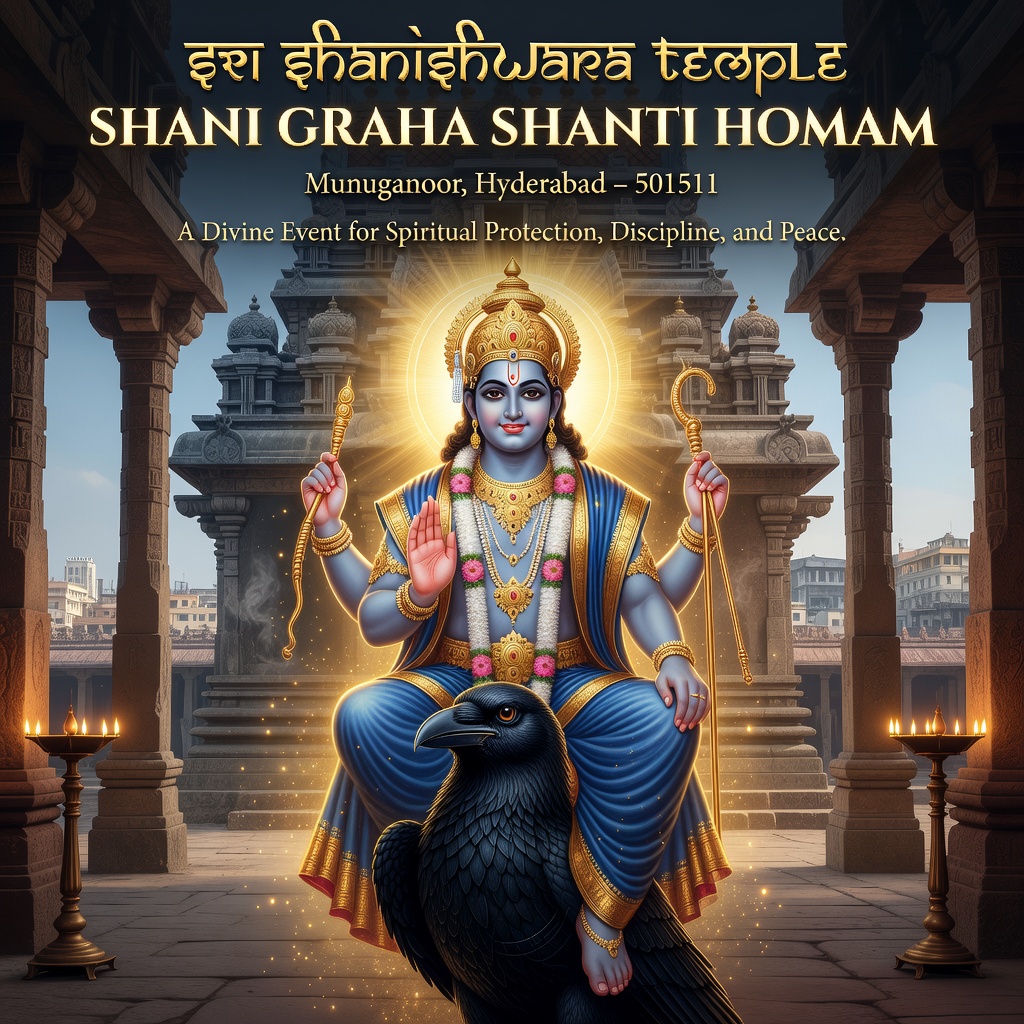
Rituals, Importance, and Spiritual Benefits of Shani Graha Shanti Homam
Shani Graha Shanti Homam is dedicated to Shani, one of the nine celestial bodies in Hindu astrology, known as Lord Saturn. Lord Shani rules discipline, justice, patience, responsibility, and karma. In Hindu mythology, Shani Dev examines the deeds of every living soul and wants everyone to embrace truth, morality, and humility.
This homam is performed to maintain peace of mind, stability, and protection from evil, and to help overcome life’s challenges. It is strongly related to the astrological timings of Sade Sati Shani and other Saturn-related influences. The ceremony consists of reciting Vedic mantras, some sacred offerings, and performing prayers and spiritual practices (sadhana) to obtain divine grace
Who Is Lord Shani?
Literally, Shani looks like a planet, Kal Purush, described as one of the Navagraha (one of the Navagraha) in ancient Hindu traditions. According to the traditional narrative, he is the son of Surya Dev, the Sun God, and Chhaya Devi. He is often portrayed riding on a crow, and his persona represents seriousness, discipline, and a lack of material pride.
It is believed that Shani Dev represents struggles. On the other hand, Hindu belief also holds that he is a guru who leads humans toward duty, honesty, patience, spirituality, etc. He also represents the results of past actions and reminds us of our responsibilities.
Lord Shani is worshipped because he cultivates character qualities—humility, self-control, perseverance, and faith during hard times.
Importance of Shani Graha Shanti Homam
The main importance of Shani Graha Shanti Homam is that it brings balance, fortitude, and wellbeing. In Vedic astrology, Saturn represents discipline, hard work, responsibility, longevity, and lessons learnt through experience.
When individuals read that Saturn is unfavourably placed in a birth chart, it can bring confusion, delays, added responsibilities, and professional and personal stress. The homam can be done as a remedy through a dialogue with an astrologer or adopted by followers because of their family’s tradition of practicing it.
The rite reminds participants to reflect on their deeds, discharge their social obligations, perform acts of charity, and adopt a more temperate lifestyle. Prayer and ritual can be meaningful spiritual exercises that encourage reflection on a person, event, idea, or set of ideas, but they go beyond astrology.
Crucial Rituals Performed in the Homam
The Shani Graha Shanti Homam is performed mainly according to traditional Vedic procedures. The precise order may vary by temple, priest, regional customs, and family customs.
Sankalpam
The ritual begins with Sankalpam, an official proclamation the devotee makes to conduct the homam. Collection of Name, Family Information, and Intentions in the Prayer: During the prayer, the priest may collect your name, family information, and your intention for the prayer. This level of commitment is required to complete this spiritual work.
Ganapathi Puja
Devotees worship Lord Ganesha at the beginning of the ceremony because it is believed to help the karmas succeed without obstacles. Devotees perform the homam to remove obstacles and ensure success.
Navagraha Puja
You may perform puja to the Navagraha (the nine planetary deities) to bring about balance and harmony. Special prayers for Lord Shani are performed, and the ceremony follows traditional rituals.
Shani Mantra Chanting
The priest and devotees chant sacred mantras praising Lord Shani. A commonly recited mantra is:
Om Sham Shanaishcharaya Namah.
Devotees usually chant this mantra as an act of devotion and as a prayer for patience, discipline, shelter, and spiritual strength.
Homam and Sacred Offerings
For example, the nakshatram homam is performed by offering the prescribed materials into the sacred fire while chanting Vedic mantras. Sesame seeds, ghee, and other priest-sanctioned materials such as barley, wheat, rice, or animal products will be offered, depending on the tradition being followed.
Sacred fire signifies purity, dedication, and the prostration of prayers to God. The priest conducts the occasion according to the Vedic processes for that occasion.
Purnahuti and Mangala Aarti
Purnahuti signifies the final offering in the homam; the ceremony can end with Mangala Aarti, prayers, priest blessings, and offering prasadam.
Advantages of Shani Graha Shanti Homam
Peace of Mind
Devotees are promised peace of mind and satisfaction through prayer, mantra chanting, or participation in ritualistic practices. The ceremony gives space for reflection and surrendering of worries through faith.
Strength During Difficult Times
Astrologers believe that the worship of Lord Shani gives you courage and patience to cope with difficult parts of life. The ritual motivates you to face obstacles with fearless conviction.
Discipline and Responsibility
Hard work, justice, and accountability fall under Lord Shani. In his worship, he teaches devotees to fulfil their commitments, stay true to them, and approach responsibility with utmost seriousness.
Professional and Financial Stability
Some devotees perform the homam to receive blessings for career advancement, financial progress, and a permanent solution to career hurdles. These refer to spiritual hopes rather than guaranteed results.
Family Harmony and Well-Being
Some homams are performed to pray for family peace, health, harmony, and general well-being, including family sharing and connections. One benefit of collective prayer is that it can strengthen family unity and a shared spiritual philosophy.
Spiritual Growth
This ritual fosters humility, patience, compassion, and a turning away from excessive material desires. Such benefits lay the foundation for a more balanced and meaningful life.
When to do Shani Graha Shanti Homam?
Some perform the homam on Saturdays (the day associated with Lord Shani), while others observe Amavasya, Shani Trayodashi, or other auspicious dates based on regional customs and astrological advice.
Those with Shani Sade Sati or Shani-related planetary periods may choose to speak with a qualified priest or Vedic astrologer to confirm whether the ritual is appropriate for their case. Not every devotee should perform a large homam or Yagnya, since simple, sincere daily prayer is part of Hindu tradition.
Endowments and Charitable Acts God Recommends
Various communities also do Shani puja with black sesame seeds, sesame oil lamps, and traditional prayers. Devotees can also offer food, clothes, or other helpful items to those in need, as their capabilities allow and according to local customs.
Caring for the old, helping the needy, feeding the famished, and treating labourers fairly are active expressions of Lord Shani’s values. Charity must be voluntary, and it should be done only at a level one can afford.
So let us know the Do’s and Don’ts during Homam. With proper rituals carried out by a priest, not much is required; hence, the homam should ideally be performed by a learned priest well-versed in the necessary ceremonies. Generally, devotees are expected to remain clean, wear appropriate traditional clothing (if applicable), and participate with respect and sincerity.
Confirm offerings, mantras, and ritual requirements with the priest who conducts the ceremony. Avoid fear-based claims, unnecessary charges, and claims that a ritual will instantly remove 100% of your problems. Spiritual practices include good practical action, but should not replace medical care, financial planning, or professional advice as needed.
Conclusion
Shani Graha Shanti Homam is a vital spiritual observance in Hindu tradition, performed to please Lord Shani, the divine who governs discipline, justice, patience, and karma. Devotees invoke divine blessings for stability, peace, perseverance, and success through Sankalpam, Ganapathi Puja, Navagraha pooja, mantra chanting, sacred fire, and a concluding prayer.
Beyond its astrological significance, the homam teaches individuals to live happily, with maximum responsibility and honesty, by helping the needy and staying patient in tough times. When performed sincerely and used as a spur to more effective action, this holy occasion can be a time of growth for devotees, helping them face life’s trials with a better-grounded sense of faith and confidence.
Note: TEMPLE NAME: SRI SHANISHWARA TEMPLE
ADDRESS: MUNUGANOOR, HYDERABAD – 501511
Sri Shanishwara Temple invites all devotees to participate in the sacred Shani Graha Shanti Homam on the auspicious occasion of Shani Trayodashi.
DATE: 24 October 2026 (Saturday)
TIME: 8:30 AM
Devotees are welcome to seek the divine blessings of Lord Shani Dev for peace, patience, prosperity, stability, and spiritual well-being. Join this sacred occasion with faith and devotion and offer prayers to Lord Shani Dev.
Leave a Reply